Showing posts with label Grasscycling. Show all posts

Thursday, September 25, 2014

A Primer on Autumn Lawn Care

Homeowners often make the mistake of thinking that the secret to a good lawn is lots of work in the spring. However, perhaps the most vital period of time for healthy turf is the fall, where proper feeding and care will result in a naturally lush and beautiful lawn in the spring, which will keep its green all year long.

Grasscycling for All Season Lawn Care

Healthy lawn care year-round starts and ends with grasscycling -- leaving those nutrient-rich clippings on the lawn when you mow. Do not be fooled by the old myth of bagging clippings when the weather turns nippy. Clippings can be left behind right up to the last mowing of the year. Worms will continue to pop out of their burrows and drag clippings deeper into the soil as long as soil is not frozen, and bacteria will continue to help break down the organic clippings even under a mantle of snow!

Grasscycling Means Leaf-cycling

As leaves fall onto lawn areas, your lawnmower can be used as a mobile chipper-shredder to run over the leaves and shred them into smaller particles. No raking or bagging required! You can continue to mulch leaves right into your soil all autumn long provided that the layer of fallen leaves does not exceed more than half and inch. It also helps if the leaves are primarily dry. Those colorful leaf “bits” provide much-needed organic matter for your soil. Soils that are organically well-fed are healthy soils which will easily grow healthy lawns.

Fall is Feeding Time

One of the major causes for turf disease and unhealthy lawns is overfeeding and fertilizing at the wrong time of year. Bad feeding practices and relying on synthetic “quick fix” fertilizers and lawn chemicals can have long term harmful impacts on your lawn and on the environment, especially groundwater and streams. To ensure a healthy lawn and environment, feed your lawn now and do it right.
  • Use your soil test results to determine proper application rates. If you haven’t tested your soil -- do it now! Contact your local Cooperative Extension Service office for a reliable five-ten dollar test kit.
  • Underfeed rather than overfeed; too much fertilizer leads to disease and thatch. Also, grasscyclers are already recycling a substantial amount of nutrients every time they mow.
  • Lawns should “eat” slowly. Avoid quick-release or water-soluble fertilizers. Generally, using a organic mix or low-analysis natural fertilizer (contents usually include bloodmeal, bonemeal, rock phosphate, and various manures), will provide plant roots will most of the nutrients they’ll require all year long. If synthetics are more readily available, make sure that the fertilizer is water-insoluble, or you’ll lose most of the nutrient benefit after the first rain.
  • Compost is a near complete meal -- and hefty dose of valuable organic matter -- for most lawns. You can use your own home-grown compost or purchase a commercial product, the most common being Milorganite, although many communities (and zoos!) often sell composted leaves and biosolids locally, in addition to various composted manure products. Compost can be spread over a lawn area as a topdressing about one-quarter inch thick.
  • Apply lime and other rock minerals, as indicated by your soil test. Normally, ground calcitic limestone is preferred over dolomitic lime, unless your soil suffers from a magnesium deficiency. Using ground rather than powdered lime will also ensure that the lime breaks down slowly during the winter and spring without washing off.

A Breath of Fresh Air

Aerating lawns is perhaps one of the most beneficial measures to ensure healthy soil and vigorous roots. Core aeration, which pulls plugs out of the soil, is the most effective method, and can be done by a lawncare contractor -- or by renting the equipment. The cost is usually the same either way. Aeration helps air reach organisms in the soil which break down organic matter and produce nutrients for the grass roots. It also allows organic matter, like leaf and grass particles or compost, to enter deeper into the plants’ root zones, improving soil and lawns all at once. The soil “plugs” also provide minerals for the soil surface.

Going to Seed

This is your last chance to get cool weather grass growing in bare patches. For trouble areas, it is best to roughen up the area with a rake, topdress with a thin layer of compost, and then apply the appropriate variety of grass seed and water evenly.

Remember that fall is the real beginning of the lawn care season. A little extra work now will allow you to enjoy those longer, warmer days of spring and summer a lot more next year.

Copyright 2014, Joseph M. Keyser

Tuesday, August 05, 2014

Wising Up to a Water-wise Landscape

As I edit this article, the only flowing water in the western part of the U.S. seems to be a watermain break at UCLA.  Otherwise, it's a desert out there -- and not just where there's always been desert.  But drought is a common problem for much of the country.  During the hottest summer months, our lawns and gardens face a number of environmental challenges which threaten their health and beauty. Wilting and discoloration of lawns and foliage is a common example, as are flowers dropping buds, or tomatoes succumbing to blossom-end rot. And yet these symptoms also herald additional complications, as voracious insect pests and fungal diseases find an easy prey in plants under stress. The root of the problem is soil moisture and whether plants are getting enough to drink during cloudless, 90 degree days.

The solution to dry soils and drought, however, is not simply to run a hose and run up a huge water bill. Watering is very often the most wasteful and expensive of solutions -- with improper watering or overwatering leading to even more short and long-term problems for the landscape. To keep your corner of the globe green, it is best to become water-wise.

Liquid Lawn Care

Lawns are the dominant part of most landscapes. Grass is easy to put in, especially over a large area, but keeping grass green and lush is another story. Lawns are notorious water hogs, with most doting homeowners applying much more water than a lawn really needs, often squandering as much as 100,000 gallons on a typical quarter-acre suburban lot. Fortunately, there are a number of simple water-wise practices that can actually improve the health of your lawn, while saving money, time, and tens of thousands of gallons of precious water.

Stop watering. Although it sounds like lawn care heresy, most grasses (except bluegrass) can safely be allowed to enter a period of dormancy during the driest part of the summer. In fact, dormancy is a natural mechanism to help grass survive drought and heat. Your lawn will recover with the return of rain and cooler temperatures.

Stop fertilizing. The worst possible time in the year to apply fertilizer is in the summer. That jolt of nutrient pushes grass plants to grow unsustainably, risking health and vigor, and interrupting root development when it is most needed. Wait until fall before even thinking about fertilizing.

Grasscycle. Let grass clippings remain on the lawn when you mow, and cut your grass no lower than 3 inches. Clippings are over 90 percent water, and, as they filter to the soil surface, they provide a temporary layer of mulch to conserve soil moisture; taller grass also shades the soil, reducing surface heat and evaporation.

Watering do's and don'ts. If you must water, do it right. Water only in the early morning, never during the day or in the evening; improper watering can lead to fungal diseases or scalded foliage. Do not water on windy days, as breezes only hasten evaporation. Do not water driveways, streets or sidewalks; in addition to wasting water, runoff entering stormdrains can elevate stream temperatures and harm or kill sensitive fish and other aquatic life.

Water lawns only when they need it, normally when foliage appears dull, bluish-grey, or when walking on grass leaves footprints. Avoid frequent and shallow waterings which can cause thatch and shallow, drought-sensitive roots. Lawns require about one inch of water, although no more than once a week. To measure, place a flat pan under the sprinkler until one inch of water has accumulated, then move to a new location. Ensure that soil is moistened to a depth of four to six inches by pushing a screwdriver into the ground as your indicator. Turn off your hose if water starts to spill onto paved areas; wait 30 minutes, and resume watering.

The Water-Wise Landscape

As lawns require about five times more water than other plants in the landscape, the best water-wise practice is to reduce the amount of space dedicated to turfgrass, while also improving the quality of the soil and its moisture-holding ability.

Eliminate the competition. Lawns often run right up to and under trees and shrubs. However, grass roots easily "steal" water from these other plants, while still struggling to survive in the shade. Instead of grass, substitute an organic mulch, such as wood chips, shredded leaves or leaf mold, or plant ground covers -- you can even combine the both options for a low-water, low-maintenance, and attractive planting area.

Expand planting beds. Increase privacy and landscape value by developing "planting islands" in your sea of grass. Plant trees and shrubs in spacious, sweeping beds, rather than individually. Existing trees and shrubs can also be linked together as planting islands by adding an additional tree or two and replacing the lawn area between them with mulch or ground covers. In sunnier spots, "mulch islands" can be established, utilizing ornamental grasses, showy perennials, and hardy native plants. Eventually, over a period of time, these individual "islands" can become the dominant landscape feature, with lawn areas now serving as easily-managed green lakes and open spaces among a more natural, graceful, and beautiful setting.

Mass plantings. Similar to planting islands for trees, it is best to mass plants together, rather than spreading them across a broad area. Massed plantings have a stronger visual impact than a row of annuals dotted in front of shrubbery. Moreover, by grouping plants together according to similar water needs, they can be cared for much more easily, and can more readily care for themselves. A thick, established group of plants will keep out weeds and will shade the soil around their root zones, thereby conserving precious moisture and reducing drastic changes in soil temperature.

Xeriscaping. Although xeriscaping (xeros = dry) originally related to landscaping in extremely dry climates, its principles, which include using water-efficient and drought-tolerant plants, fit well with our water-wise goals. For example, using regionally adapted plants, such as the growing variety of natives, ensures that the plant can handle this area's seasonal temperatures and rainfall, along with other environmental and soil conditions. But non-natives can also be used to add color and texture to the garden, especially those which are suited for dry, sunny locations, like many of the Mediterranean herbs: rosemary, thyme, etc. Generally speaking, silver-grey plants, such as Dusty Miller, Artemisia, Santolina, and so, feature foliage which reflect sunlight, thereby keeping the plant cool and reducing water loss. However, xeriscaping does not mean using only colorless plants, Yuccas and Prickly pear cactus -- it does mean using the right plant in the right place. See below.

Mulch, mulch, mulch. Mulching with organic materials is one of the easiest methods for conserving soil moisture and providing long-term soil improvement. Mulches can be placed on soil up to four inches deep, except over shallow-rooted plants like azaleas. After applying mulch, especially when using wood chips or materials which appears dry, it is advisable to water both mulch and plants thoroughly at first. Dry mulch might otherwise keep moisture from percolating into the soil. Woody mulches are best used around permanent plantings, like trees and shrubs, while finer textured mulches, such as untreated grass clippings, compost, shredded leaves and leaf mold, are preferable for tender plantings, such as annual and perennial flowers and vegetables.

Compost, aerating, topdressing. Improving soil quality will also improve its soil retention ability. Garden beds can be amended by adding compost, either by digging it in manually or rototilling it into the soil, which is best done in autumn or early spring. Existing beds can be improved by using compost as a mulch or sidedressing anytime of year. Aerating a lawn allows air to reach grass roots, helps microorganisms break down organic matter to feed the lawn naturally, and facilitates water penetration. Topdressing is the practice of applying compost to the surface of the lawn up to one-half inch deep, increasing the soil's organic content, enhancing earthworm activity, and serving as a mulch to protect shallow grassroots.

Becoming water-wise can be as simple as changing some everyday practices -- or as involved and comprehensive as changing the face of your landscape. Like most endeavors, your success depends upon a program which matches your interests, abilities, and available resources -- although the ultimate goal of the water-wise landscape is to safeguard our existing water resources, and to provide more time for your other interests.

Copyright 2014, Joseph M. Keyser

Wednesday, July 30, 2014

Time for a Water-Wise Landscape

During the hottest summer months, our lawns and gardens face a number of environmental challenges which threaten their health and beauty. Wilting and discoloration of lawns and foliage is a common example, as are flowers dropping buds, or tomatoes succumbing to blossom-end rot. And yet these symptoms also herald additional complications, as voracious insect pests and fungal diseases find an easy prey in plants under stress. The root of the problem is soil moisture and whether plants are getting enough to drink during cloudless, 90 degree days.

The solution to dry soils and drought, however, is not simply to run a hose and run up a huge water bill. Watering is very often the most wasteful and expensive of solutions -- with improper watering or overwatering leading to even more short and long-term problems for the landscape. To keep your corner of the globe green, it is best to become water-wise.

Liquid Lawn Care

Lawns are the dominant part of most landscapes. Grass is easy to put in, especially over a large area, but keeping grass green and lush is another story. Lawns are notorious water hogs, with most doting homeowners applying much more water than a lawn really needs, often squandering as much as 100,000 gallons on a typical quarter-acre suburban lot. Fortunately, there are a number of simple water-wise practices that can actually improve the health of your lawn, while saving money, time, and tens of thousands of gallons of precious water.

Stop watering. Although it sounds like lawn care heresy, most grasses (except bluegrass) can safely be allowed to enter a period of dormancy during the driest part of the summer. In fact, dormancy is a natural mechanism to help grass survive drought and heat. Your lawn will recover with the return of rain and cooler temperatures.

Stop fertilizing. The worst possible time in the year to apply fertilizer is in the summer. That jolt of nutrient pushes grass plants to grow unsustainably, risking health and vigor, and interrupting root development when it is most needed. Wait until fall before even thinking about fertilizing.

Grasscycle. Let grass clippings remain on the lawn when you mow, and cut your grass no lower than 3 inches. Clippings are over 90 percent water, and, as they filter to the soil surface, they provide a temporary layer of mulch to conserve soil moisture; taller grass also shades the soil, reducing surface heat and evaporation.

Watering do's and don'ts. If you must water, do it right. Water only in the early morning, never during the day or in the evening; improper watering can lead to fungal diseases or scalded foliage. Do not water on windy days, as breezes only hasten evaporation. Do not water driveways, streets or sidewalks; in addition to wasting water, runoff entering stormdrains can elevate stream temperatures and harm or kill sensitive fish and other aquatic life.

Water lawns only when they need it, normally when foliage appears dull, bluish-grey, or when walking on grass leaves footprints. Avoid frequent and shallow waterings which can cause thatch and shallow, drought-sensitive roots. Lawns require about one inch of water, although no more than once a week. To measure, place a flat pan under the sprinkler until one inch of water has accumulated, then move to a new location. Ensure that soil is moistened to a depth of four to six inches by pushing a screwdriver into the ground as your indicator. Turn off your hose if water starts to spill onto paved areas; wait 30 minutes, and resume watering.

The Water-Wise Landscape

As lawns require about five times more water than other plants in the landscape, the best water-wise practice is to reduce the amount of space dedicated to turfgrass, while also improving the quality of the soil and its moisture-holding ability.

Eliminate the competition. Lawns often run right up to and under trees and shrubs. However, grass roots easily "steal" water from these other plants, while still struggling to survive in the shade. Instead of grass, substitute an organic mulch, such as wood chips, shredded leaves or leaf mold, or plant ground covers -- you can even combine the both options for a low-water, low-maintenance, and attractive planting area.

Expand planting beds. Increase privacy and landscape value by developing "planting islands" in your sea of grass. Plant trees and shrubs in spacious, sweeping beds, rather than individually. Existing trees and shrubs can also be linked together as planting islands by adding an additional tree or two and replacing the lawn area between them with mulch or ground covers. In sunnier spots, "mulch islands" can be established, utilizing ornamental grasses, showy perennials, and hardy native plants. Eventually, over a period of time, these individual "islands" can become the dominant landscape feature, with lawn areas now serving as easily-managed green lakes and open spaces among a more natural, graceful, and beautiful setting.

Mass plantings. Similar to planting islands for trees, it is best to mass plants together, rather than spreading them across a broad area. Massed plantings have a stronger visual impact than a row of annuals dotted in front of shrubbery. Moreover, by grouping plants together according to similar water needs, they can be cared for much more easily, and can more readily care for themselves. A thick, established group of plants will keep out weeds and will shade the soil around their root zones, thereby conserving precious moisture and reducing drastic changes in soil temperature.

Xeriscaping. Although xeriscaping (xeros = dry) originally related to landscaping in extremely dry climates, its principles, which include using water-efficient and drought-tolerant plants, fit well with our water-wise goals. For example, using regionally adapted plants, such as the growing variety of natives, ensures that the plant can handle this area's seasonal temperatures and rainfall, along with other environmental and soil conditions. But non-natives can also be used to add color and texture to the garden, especially those which are suited for dry, sunny locations, like many of the Mediterranean herbs: rosemary, thyme, etc. Generally speaking, silver-grey plants, such as Dusty Miller, Artemisia, Santolina, and so, feature foliage which reflect sunlight, thereby keeping the plant cool and reducing water loss. However, xeriscaping does not mean using only colorless plants, Yuccas and Prickly pear cactus -- it does mean using the right plant in the right place. See below.

Mulch, mulch, mulch. Mulching with organic materials is one of the easiest methods for conserving soil moisture and providing long-term soil improvement. Mulches can be placed on soil up to four inches deep, except over shallow-rooted plants like azaleas. After applying mulch, especially when using wood chips or materials which appears dry, it is advisable to water both mulch and plants thoroughly at first. Dry mulch might otherwise keep moisture from percolating into the soil. Woody mulches are best used around permanent plantings, like trees and shrubs, while finer textured mulches, such as untreated grass clippings, compost, shredded leaves and leaf mold, are preferable for tender plantings, such as annual and perennial flowers and vegetables.

Compost, aerating, topdressing. Improving soil quality will also improve its soil retention ability. Garden beds can be amended by adding compost, either by digging it in manually or rototilling it into the soil, which is best done in autumn or early spring. Existing beds can be improved by using compost as a mulch or sidedressing anytime of year. Aerating a lawn allows air to reach grass roots, helps microorganisms break down organic matter to feed the lawn naturally, and facilitates water penetration. Topdressing is the practice of applying compost to the surface of the lawn up to one-half inch deep, increasing the soil's organic content, enhancing earthworm activity, and serving as a mulch to protect shallow grassroots.

Becoming water-wise can be as simple as changing some everyday practices -- or as involved and comprehensive as changing the face of your landscape. Like most endeavors, your success depends upon a program which matches your interests, abilities, and available resources -- although the ultimate goal of the water-wise landscape is to safeguard our existing water resources, and to provide more time for your other interests.

Copyright 2014, Joseph M. Keyser
Wednesday, October 02, 2013

Autumn Lawn Care

Homeowners often make the mistake of thinking that the secret to a good lawn is lots of work in the spring. However, perhaps the most vital period of time for healthy turf is the fall, where proper feeding and care will result in a naturally lush and beautiful lawn in the spring, which will keep its green all year long.

Grasscycling for All Season Lawn Care

Healthy lawn care year-round starts and ends with grasscycling -- leaving those nutrient-rich clippings on the lawn when you mow. Do not be fooled by the old myth of bagging clippings when the weather turns nippy. Clippings can be left behind right up to the last mowing of the year. Worms will continue to pop out of their burrows and drag clippings deeper into the soil as long as soil is not frozen, and bacteria will continue to help break down the organic clippings even under a mantle of snow!

Grasscycling Means Leaf-cycling

As leaves fall onto lawn areas, your lawnmower can be used as a mobile chipper-shredder to run over the leaves and shred them into smaller particles. No raking or bagging required! You can continue to mulch leaves right into your soil all autumn long provided that the layer of fallen leaves does not exceed more than half and inch. It also helps if the leaves are primarily dry. Those colorful leaf “bits” provide much-needed organic matter for your soil. Soils that are organically well-fed are healthy soils which will easily grow healthy lawns.

Fall is Feeding Time

One of the major causes for turf disease and unhealthy lawns is overfeeding and fertilizing at the wrong time of year. Bad feeding practices and relying on synthetic “quick fix” fertilizers and lawn chemicals can have long term harmful impacts on your lawn and on the environment, especially groundwater and streams. To ensure a healthy lawn and environment, feed your lawn now and do it right.
  • Use your soil test results to determine proper application rates. If you haven’t tested your soil -- do it now! Call your local Cooperative Extension Service office for a reliable five-ten dollar test kit.
  • Underfeed rather than overfeed; too much fertilizer leads to disease and thatch. Also, grasscyclers are already recycling a substantial amount of nutrients every time they mow.
  • Lawns should “eat” slowly. Avoid quick-release or water-soluble fertilizers. Generally, using a organic mix or low-analysis natural fertilizer (contents usually include bloodmeal, bonemeal, rock phosphate, and various manures), will provide plant roots will most of the nutrients they’ll require all year long. If synthetics are more readily available, make sure that the fertilizer is water-insoluble, or you’ll lose most of the nutrient benefit after the first rain.
  • Compost is a near complete meal -- and hefty dose of valuable organic matter -- for most lawns. You can use your own home-grown compost or purchase a commercial product, the most common being Milorganite, although many communities (and zoos!) often sell composted leaves and biosolids locally, in addition to various composted manure products. Compost can be spread over a lawn area as a topdressing about one-quarter inch thick.
  • Apply lime and other rock minerals, as indicated by your soil test. Normally, ground calcitic limestone is preferred over dolomitic lime, unless your soil suffers from a magnesium deficiency. Using ground rather than powdered lime will also ensure that the lime breaks down slowly during the winter and spring without washing off.

A Breath of Fresh Air

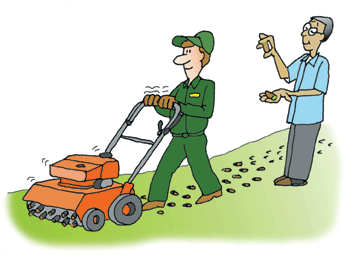
Aerating lawns is perhaps one of the most beneficial measures to ensure healthy soil and vigorous roots. Core aeration, which pulls plugs out of the soil, is the most effective method, and can be done by a lawncare contractor -- or by renting the equipment. The cost is usually the same either way. Aeration helps air reach organisms in the soil which break down organic matter and produce nutrients for the grass roots. It also allows organic matter, like leaf and grass particles or compost, to enter deeper into the plants’ root zones, improving soil and lawns all at once. The soil “plugs” also provide minerals for the soil surface.

Going to Seed

This is your last chance to get cool weather grass growing in bare patches. For trouble areas, it is best to roughen up the area with a rake, topdress with a thin layer of compost, and then apply the appropriate variety of grass seed and water evenly.

Remember that fall is the real beginning of the lawn care season. A little extra work now will allow you to enjoy those longer, warmer days of spring and summer a lot more next year.

Copyright 2013, Joseph M. Keyser

Sunday, June 19, 2011

Nurturing a Water-Wise Landscape

During the hottest summer months, our lawns and gardens face a number of environmental challenges which threaten their health and beauty. Wilting and discoloration of lawns and foliage is a common example, as are flowers dropping buds, or tomatoes succumbing to blossom-end rot. And yet these symptoms also herald additional complications, as voracious insect pests and fungal diseases find an easy prey in plants under stress. The root of the problem is soil moisture and whether plants are getting enough to drink during cloudless, 90 degree days.

The solution to dry soils and drought, however, is not simply to run a hose and run up a huge water bill. Watering is very often the most wasteful and expensive of solutions -- with improper watering or overwatering leading to even more short and long-term problems for the landscape. To keep your corner of the globe green, it is best to become water-wise.

Liquid Lawn Care

Lawns are the dominant part of most landscapes. Grass is easy to put in, especially over a large area, but keeping grass green and lush is another story. Lawns are notorious water hogs, with most doting homeowners applying much more water than a lawn really needs, often squandering as much as 100,000 gallons on a typical quarter-acre suburban lot. Fortunately, there are a number of simple water-wise practices that can actually improve the health of your lawn, while saving money, time, and tens of thousands of gallons of precious water.

Stop watering. Although it sounds like lawn care heresy, most grasses (except bluegrass) can safely be allowed to enter a period of dormancy during the driest part of the summer. In fact, dormancy is a natural mechanism to help grass survive drought and heat. Your lawn will recover with the return of rain and cooler temperatures.

Stop fertilizing. The worst possible time in the year to apply fertilizer is in the summer. That jolt of nutrient pushes grass plants to grow unsustainably, risking health and vigor, and interrupting root development when it is most needed. Wait until fall before even thinking about fertilizing.

Grasscycle. Let grass clippings remain on the lawn when you mow, and cut your grass no lower than 3 inches. Clippings are over 90 percent water, and, as they filter to the soil surface, they provide a temporary layer of mulch to conserve soil moisture; taller grass also shades the soil, reducing surface heat and evaporation.

Watering do's and don'ts. If you must water, do it right. Water only in the early morning, never during the day or in the evening; improper watering can lead to fungal diseases or scalded foliage. Do not water on windy days, as breezes only hasten evaporation. Do not water driveways, streets or sidewalks; in addition to wasting water, runoff entering stormdrains can elevate stream temperatures and harm or kill sensitive fish and other aquatic life.

Water lawns only when they need it, normally when foliage appears dull, bluish-grey, or when walking on grass leaves footprints. Avoid frequent and shallow waterings which can cause thatch and shallow, drought-sensitive roots. Lawns require about one inch of water, although no more than once a week. To measure, place a flat pan under the sprinkler until one inch of water has accumulated, then move to a new location. Ensure that soil is moistened to a depth of four to six inches by pushing a screwdriver into the ground as your indicator. Turn off your hose if water starts to spill onto paved areas; wait 30 minutes, and resume watering.

The Water-Wise Landscape

As lawns require about five times more water than other plants in the landscape, the best water-wise practice is to reduce the amount of space dedicated to turfgrass, while also improving the quality of the soil and its moisture-holding ability.

Eliminate the competition. Lawns often run right up to and under trees and shrubs. However, grass roots easily "steal" water from these other plants, while still struggling to survive in the shade. Instead of grass, substitute an organic mulch, such as wood chips, shredded leaves or leaf mold, or plant ground covers -- you can even combine the both options for a low-water, low-maintenance, and attractive planting area.

Expand planting beds. Increase privacy and landscape value by developing "planting islands" in your sea of grass. Plant trees and shrubs in spacious, sweeping beds, rather than individually. Existing trees and shrubs can also be linked together as planting islands by adding an additional tree or two and replacing the lawn area between them with mulch or ground covers. In sunnier spots, "mulch islands" can be established, utilizing ornamental grasses, showy perennials, and hardy native plants. Eventually, over a period of time, these individual "islands" can become the dominant landscape feature, with lawn areas now serving as easily-managed green lakes and open spaces among a more natural, graceful, and beautiful setting.

Mass plantings. Similar to planting islands for trees, it is best to mass plants together, rather than spreading them across a broad area. Massed plantings have a stronger visual impact than a row of annuals dotted in front of shrubbery. Moreover, by grouping plants together according to similar water needs, they can be cared for much more easily, and can more readily care for themselves. A thick, established group of plants will keep out weeds and will shade the soil around their root zones, thereby conserving precious moisture and reducing drastic changes in soil temperature.

Xeriscaping. Although xeriscaping (xeros = dry) originally related to landscaping in extremely dry climates, its principles, which include using water-efficient and drought-tolerant plants, fit well with our water-wise goals. For example, using regionally adapted plants, such as the growing variety of natives, ensures that the plant can handle this area's seasonal temperatures and rainfall, along with other environmental and soil conditions. But non-natives can also be used to add color and texture to the garden, especially those which are suited for dry, sunny locations, like many of the Mediterranean herbs: rosemary, thyme, etc. Generally speaking, silver-grey plants, such as Dusty Miller, Artemisia, Santolina, and so, feature foliage which reflect sunlight, thereby keeping the plant cool and reducing water loss. However, xeriscaping does not mean using only colorless plants, Yuccas and Prickly pear cactus -- it does mean using the right plant in the right place. See below.

Mulch, mulch, mulch. Mulching with organic materials is one of the easiest methods for conserving soil moisture and providing long-term soil improvement. Mulches can be placed on soil up to four inches deep, except over shallow-rooted plants like azaleas. After applying mulch, especially when using wood chips or materials which appears dry, it is advisable to water both mulch and plants thoroughly at first. Dry mulch might otherwise keep moisture from percolating into the soil. Woody mulches are best used around permanent plantings, like trees and shrubs, while finer textured mulches, such as untreated grass clippings, compost, shredded leaves and leaf mold, are preferable for tender plantings, such as annual and perennial flowers and vegetables.

Compost, aerating, topdressing. Improving soil quality will also improve its soil retention ability. Garden beds can be amended by adding compost, either by digging it in manually or rototilling it into the soil, which is best done in autumn or early spring. Existing beds can be improved by using compost as a mulch or sidedressing anytime of year. Aerating a lawn allows air to reach grass roots, helps microorganisms break down organic matter to feed the lawn naturally, and facilitates water penetration. Topdressing is the practice of applying compost to the surface of the lawn up to one-half inch deep, increasing the soil's organic content, enhancing earthworm activity, and serving as a mulch to protect shallow grassroots.

Becoming water-wise can be as simple as changing some everyday practices -- or as involved and comprehensive as changing the face of your landscape. Like most endeavors, your success depends upon a program which matches your interests, abilities, and available resources -- although the ultimate goal of the water-wise landscape is to safeguard our existing water resources, and to provide more time for your other interests.

Copyright 2011, Joseph M. Keyser

Sunday, June 05, 2011

Green & Easy Lawn Care

Lawns can play an important part in our landscape: providing a welcome, green space for children, backyard barbecues, and other outdoor activities, in addition to their aesthetic value. Lawns also contribute significant environmental benefits: preventing erosion, nutrient runoff, filtering air, and providing natural "air conditioning" during the summer.

However, all of those advantages are lost when lawn care becomes warfare. When children and pets are at risk by crossing treated turf areas, or when sprays endanger the health of individuals who are immune-impaired or suffer from respiratory problems, we have to measure the real costs of lawn perfection. Are nodding violets, tasty spring onions, and edible dandelions so terrible that we're willing to imperil the health of ourselves and loved ones?

Instead of filling shopping carts with toxic solutions, we might borrow from the
Hippocratic Oath and first do no harm. When dealing with nature, less is almost always more. And the best system for lawn care is actually simple and inexpensive.

Mowing Tips

Mowing comprises about 95 percent of lawn care — yet mowers and cutting blades are the most overlooked elements of maintaining a healthy lawn.

Tune up your mower: Either do it yourself, or look for specials for professional tune-ups. An efficient engine will run smoother and faster, cut grass more quickly and evenly, and facilitate grasscycling by chopping grass into fine particles. It will also cause less air pollution, use less fuel, and save mowing time.

Sharpen your blade: Carefully remove the blade and bring it to a shop for sharpening (covered by most tune-ups). Consider buying an extra cutting blade to switch to during mid-season. Sharp blades provide a clean cut that will heal quickly. Dull blades rip and tear grass, opening vascular tissue to disease organisms. Poor cutting also results in lawns taking on a dull, brown appearance — which many lawn jockeys improperly try to correct by fertilizing!

Cut high: Taller grass will develop proportionally deeper, healthier roots, resist drought and summer heat, and prevent most broadleaf weed seeds from germinating. Fescues and Bluegrass should be cut no lower than 2-1/2 to 3 inches; Zoysia at about 1-1/2 inch.

Alter your mowing pattern: Do not use the same pattern or path to cut your lawn week after week. Periodically changing the direction in which you mow will help you avoid soil compaction.

A Proper Diet

Millions of advertising dollars are spent annually to sell fertilizers or "fertilizer programs," especially in the spring, when lawns have no need for supplemental nutrients. Overfeeding is a principal cause of turf disease. A quick jolt of nitrogen applied now will result in a wild burst of growth — and lots and lots of mowing! And the grass will be leggy and weak, unable to handle stress caused by changing temperatures and too much or too little rain. So hold off fertilizing until the fall, when it is appropriate!

Feed your lawn with clippings: When you grasscycle — leaving clippings behind when you mow — you're helping to recycle all of the free nutrients in every grass particle.

Watering

Improper and over-watering is another cause of lawn disease. Unless you are establishing a new lawn or overseeding, you don't need to water at all. Lawns thrive when roots are encouraged — and allowed — to grow deep. Watering creates a hydroponic zone at the top of the soil, making grass lazy and easy prey to drought and the scorching summer sun. Forget watering, and don't worry when fescues and other cool weather grasses brown out during the summer: dormancy is normal -- and inexpensive. Lawns will green-up when cooler temperatures and rainfall return. The environmental and economic cost of keeping a lawn green during the summer is staggering: hundreds of thousands of gallons of water for most lawns. Additionally, improper watering is a major culprit in fungal diseases, especially for folks who water in the evening. Of course, you can always buy fungicides — or you could just stop watering. Incidentally, overfeeding and overwatering are leading causes of thatch. So why bother?

Weeds

Homeowners have been sold an unrealistic picture of a healthy lawn. They expect a perfect monoculture, like a putting green. Weeds are never tolerated, although most of them have more right to be in our soils than the hybridized turf varieties we plant. A vast armada of herbicides is available, many with decidedly lethal brand names. And yet weed control can be chemical-free, for the most part. Perhaps the key ingredient is patience. The fact is that most weeds cannot compete or gain a foothold in a dense, healthy lawn. And weeds can be pushed out by grass — but it will take time. Nature thinks in glacial terms: seasons and years. There are no quick fixes.

Best First Steps

To grow the most vigorous lawn possible, there are certain steps to be followed:

Test your soil: Most states have local Cooperative Extension Service offices that offer soil testing for a nominal cost (usually around five to ten dollars). You can find your local city or county office online or in the phone directory blue pages. In addition, many garden centers also offer soil testing, although the costs are about ten times greater. But a soil test is one of the best investments you can make for your lawn. Test results will tell you exactly what to feed your lawn, how much lime to apply, when to apply those amendments, and much more. As many weeds grow in poor or acidic soils, you can make them go away just by correcting your soil's chemistry.

Aerate your lawn: It's a breath of fresh air for roots and soil, and one of the most recommended practices for relieving compaction, reducing thatch, and encouraging deep and extensive root growth — all of which will force out "undesirables." Some tough weeds, like plantain, will actually thrive in compacted soil — looser, aerated soils will resist such weed incursions. You can rent aerating machines or hire a lawn service.

Select the proper grass variety: Check with your local Cooperative Extension Service for advice on the best varieties of grass for your lawn, considering soil type, exposure, existing grass type, etc. The right grass for the right place will give you long-lasting results.

Make a salad: While you wait for weeds to naturally disappear, you can always hand-pick some of the tougher weeds. Many are edible (another argument against pesticides), while others are attractive and only last a short while. Be sure to remove bulbs, in the case of wild garlic and onions, the taproots of tasty dandelions, and as much of the rootstock as possible of other perennial or pernicious weeds.

Topdressing with organic matter: Instead of fertilizing this year, consider spreading 1/4 inch of compost on lawn areas to further loosen heavy clay soils, break down thatch, and improve soil ecology.

Seed and overseed again: Getting soil in shape goes hand in hand with seeding to develop an increasingly dense lawn. Prepare soil and overseed in the Spring, or overseed after topdressing.

Why Not Relax?

Overall, you will find that working with your lawn is easier than working against it. The best, longest-lasting solutions are the simplest — although they are not the quickest. Balancing the value of human and environmental health against that of an award winning, chemically-dependent lawn, and you will probably decide to change some of your lawn care habits and put up with some weeds.

Copyright 2011, Joseph M. Keyser

Sunday, July 11, 2010

Water-Wise Landscapes

During the hottest summer months, our lawns and gardens face a number of environmental challenges which threaten their health and beauty. Wilting and discoloration of lawns and foliage is a common example, as are flowers dropping buds, or tomatoes succumbing to blossom-end rot. And yet these symptoms also herald additional complications, as voracious insect pests and fungal diseases find an easy prey in plants under stress. The root of the problem is soil moisture and whether plants are getting enough to drink during cloudless, 90 degree days.

The solution to dry soils and drought, however, is not simply to run a hose and run up a huge water bill. Watering is very often the most wasteful and expensive of solutions -- with improper watering or overwatering leading to even more short and long-term problems for the landscape. To keep your corner of the globe green, it is best to become water-wise.

Liquid Lawn Care

Lawns are the dominant part of most landscapes. Grass is easy to put in, especially over a large area, but keeping grass green and lush is another story. Lawns are notorious water hogs, with most doting homeowners applying much more water than a lawn really needs, often squandering as much as 100,000 gallons on a typical quarter-acre suburban lot. Fortunately, there are a number of simple water-wise practices that can actually improve the health of your lawn, while saving money, time, and tens of thousands of gallons of precious water.

Stop watering. Although it sounds like lawn care heresy, most grasses (except bluegrass) can safely be allowed to enter a period of dormancy during the driest part of the summer. In fact, dormancy is a natural mechanism to help grass survive drought and heat. Your lawn will recover with the return of rain and cooler temperatures.

Stop fertilizing. The worst possible time in the year to apply fertilizer is in the summer. That jolt of nutrient pushes grass plants to grow unsustainably, risking health and vigor, and interrupting root development when it is most needed. Wait until fall before even thinking about fertilizing.

Grasscycle. Let grass clippings remain on the lawn when you mow, and cut your grass no lower than 3 inches. Clippings are over 90 percent water, and, as they filter to the soil surface, they provide a temporary layer of mulch to conserve soil moisture; taller grass also shades the soil, reducing surface heat and evaporation.

Watering do's and don'ts. If you must water, do it right. Water only in the early morning, never during the day or in the evening; improper watering can lead to fungal diseases or scalded foliage. Do not water on windy days, as breezes only hasten evaporation. Do not water driveways, streets or sidewalks; in addition to wasting water, runoff entering stormdrains can elevate stream temperatures and harm or kill sensitive fish and other aquatic life.

Water lawns only when they need it, normally when foliage appears dull, bluish-grey, or when walking on grass leaves footprints. Avoid frequent and shallow waterings which can cause thatch and shallow, drought-sensitive roots. Lawns require about one inch of water, although no more than once a week. To measure, place a flat pan under the sprinkler until one inch of water has accumulated, then move to a new location. Ensure that soil is moistened to a depth of four to six inches by pushing a screwdriver into the ground as your indicator. Turn off your hose if water starts to spill onto paved areas; wait 30 minutes, and resume watering.

The Water-Wise Landscape

As lawns require about five times more water than other plants in the landscape, the best water-wise practice is to reduce the amount of space dedicated to turfgrass, while also improving the quality of the soil and its moisture-holding ability.

Eliminate the competition. Lawns often run right up to and under trees and shrubs. However, grass roots easily "steal" water from these other plants, while still struggling to survive in the shade. Instead of grass, substitute an organic mulch, such as wood chips, shredded leaves or leaf mold, or plant ground covers -- you can even combine the both options for a low-water, low-maintenance, and attractive planting area. [See the posting: Ground Covers: Made in the Shade, August 25, 2007.]

Expand planting beds. Increase privacy and landscape value by developing "planting islands" in your sea of grass. Plant trees and shrubs in spacious, sweeping beds, rather than individually. Existing trees and shrubs can also be linked together as planting islands by adding an additional tree or two and replacing the lawn area between them with mulch or ground covers. In sunnier spots, "mulch islands" can be established, utilizing ornamental grasses, showy perennials, and hardy native plants. Eventually, over a period of time, these individual "islands" can become the dominant landscape feature, with lawn areas now serving as easily-managed green lakes and open spaces among a more natural, graceful, and beautiful setting.

Mass plantings. Similar to planting islands for trees, it is best to mass plants together, rather than spreading them across a broad area. Massed plantings have a stronger visual impact than a row of annuals dotted in front of shrubbery. Moreover, by grouping plants together according to similar water needs, they can be cared for much more easily, and can more readily care for themselves. A thick, established group of plants will keep out weeds and will shade the soil around their root zones, thereby conserving precious moisture and reducing drastic changes in soil temperature.

Xeriscaping. Although xeriscaping (xeros = dry) originally related to landscaping in extremely dry climates, its principles, which include using water-efficient and drought-tolerant plants, fit well with our water-wise goals. For example, using regionally adapted plants, such as the growing variety of natives, ensures that the plant can handle this area's seasonal temperatures and rainfall, along with other environmental and soil conditions. But non-natives can also be used to add color and texture to the garden, especially those which are suited for dry, sunny locations, like many of the Mediterranean herbs: rosemary, thyme, etc. Generally speaking, silver-grey plants, such as Dusty Miller, Artemisia, Santolina, and so, feature foliage which reflect sunlight, thereby keeping the plant cool and reducing water loss. However, xeriscaping does not mean using only colorless plants, Yuccas and Prickly pear cactus -- it does mean using the right plant in the right place. See below.

Mulch, mulch, mulch. Mulching with organic materials is one of the easiest methods for conserving soil moisture and providing long-term soil improvement. Mulches can be placed on soil up to four inches deep, except over shallow-rooted plants like azaleas. After applying mulch, especially when using wood chips or materials which appears dry, it is advisable to water both mulch and plants thoroughly at first. Dry mulch might otherwise keep moisture from percolating into the soil. Woody mulches are best used around permanent plantings, like trees and shrubs, while finer textured mulches, such as untreated grass clippings, compost, shredded leaves and leaf mold, are preferable for tender plantings, such as annual and perennial flowers and vegetables.

Compost, aerating, topdressing. Improving soil quality will also improve its soil retention ability. Garden beds can be amended by adding compost, either by digging it in manually or rototilling it into the soil, which is best done in autumn or early spring. Existing beds can be improved by using compost as a mulch or sidedressing anytime of year. Aerating a lawn allows air to reach grass roots, helps microorganisms break down organic matter to feed the lawn naturally, and facilitates water penetration. Topdressing is the practice of applying compost to the surface of the lawn up to one-half inch deep, increasing the soil's organic content, enhancing earthworm activity, and serving as a mulch to protect shallow grassroots.

Becoming water-wise can be as simple as changing some everyday practices -- or as involved and comprehensive as changing the face of your landscape. Like most endeavors, your success depends upon a program which matches your interests, abilities, and available resources -- although the ultimate goal of the water-wise landscape is to safeguard our existing water resources, and to provide more time for your other interests.

Copyright 2010, Joseph M. Keyser

Monday, May 18, 2009

Defending Your Turf from Pests & Problems

Part three in a three-part series on environmental lawn care

A well-established, properly maintained lawn is naturally weed and pest resistant -- for the most part. For the other part, we need to consider a few more issues than just mowing, watering, and fertilizing correctly.

One of the great axioms of gardening is to “use the right plant in the right place.” For lawns, this means selecting a turfgrass variety suitable for your growing conditions and the amount of traffic the area will receive. Trying to establish a healthy lawn using the wrong kind of grass is as frustrating (and pointless) as baking a nonfat cheesecake.

For sunny lawns, tall fescue is the most recommended type of cool season grass, combining heat and drought tolerance with resistance to the most common diseases and pests while also holding its own in areas used for recreation.

In shadier areas, fine fescues perform best, although the thinner, more delicate blades are more sensitive to traffic, and also require well-drained soils. Red fescue is a variety gaining in popularity as it becomes established quickly and requires surprisingly little maintenance. In fact, depending on its use and location, it can provide a lush appearance even without mowing.

The most popular warm season grass is zoysia, renowned for its drought and disease tolerance and low maintenance needs. It is also somewhat infamous for invading neighboring fescue lawns and browning out from October until May. Zoysia needs full sun, loathes shade of any kind, and can take years to become fully established.

Naturally, there are other popular varieties, like Kentucky bluegrass and perennial ryegrass, as well as numerous cultivars and varietal blends. For the best and latest advice on the newest cultivars and guidance on selecting good seed sources, contact your local Cooperative Extension Service office, usually county-based, although you may need to contact the state office. Check the blue government pages of your phone directory, or search online (search cooperative extension service [and add your state or county name]).

One of the goals of cutting grass at the highest possible setting is to shade out many of the noisome broadleaf weeds which need plenty of light to grow, and whose seeds need light to germinate. In addition, providing just the right amount of nutrients and watering properly to ensure deep, dense root development will also help develop a thick mass of turf which can easily shoulder-out most weeds.

Of course, if you are just embarking on this new approach to lawn care, you might still have some weeds needing attention. For some people, simply providing the proper care for a lawn will lead to the decline of most weeds, although it may take a number of years, which is just fine with them. They tolerate a few wild violets, dandelions, and patch or two of clover. It is only a lawn after all.

For the more fastidious, whose lawns are valued gardens of grass, there are several non-toxic approaches worth consideration. One of the most exciting is corn power. Agronomists in Iowa, always looking for new ways to use corn, have discovered that corn gluten is an extremely effective pre-emergent weed control for crabgrass, dandelions, clover, purslane, among others, when applied in early spring. It will not kill existing perennial weeds, but it will prevent seeds from germinating, and also provides a low-dose of organic nitrogen to feed your lawn at the same time.

Some perennial weeds, such as wild strawberry and ground ivy, will thrive only when soils are particularly acidic. Liming will balance the pH of your soil, improving nutrient uptake by grass plants and spelling doom for the weeds. Be sure to conduct a soil test before liming. Soil test kits are usually available for a nominal fee ($5-10) from your local county cooperative extension service; many garden centers and nurseries also provide soil testing, though usually at a substantially higher price ($25-50). (Learn more about soil testing by viewing Putting Your Soil to the Test, April 10, 2009.)

One of the most common problems experienced in our region is compacted soil. Our naturally clay-heavy soils compact readily, which inhibits grass growth, water penetration and drainage, and leads to bald patches and weed growth. Moss is a good indicator of compacted soils in shady areas and plantain of compaction in sunny locations.

You can prevent some compaction by limiting foot traffic across your lawn, never walking on wet grass, and by changing your mowing pattern. Instead of always mowing from north to south every week, alternate with an east-west pattern, or mix in a diagonal or circular pattern.
Aeration is one of the least appreciated measures to ensure a lush, healthy lawn. In many respects, aerating is far more important than fertilizing and liming, and easily worth the investment every several years.

Core aeration is the most effective approach, and you can rent a motorized machine to extract plugs from the soil, although aeration is often best left to professional lawn care services, which can be more cost-effective in the short run. Professionals typically charge 40 to 80 dollars for the average 5,000-10,000 square foot lawn.

Smaller lawn areas can be manually aerated using a spading fork inserted into the soil at a 45 degree angle. Insert tines to approximately four inches and push down, rocking back and forth a bit, and loosening the soil. Repeat this process every 12-16 inches until the entire lawn area is covered.

Aeration also helps to break up thatch, which become problematic when it exceeds a half-inch in depth. Power raking will also eliminate thatch, but requires significant raking and clean-up, while core aeration does it all with a minimum of fuss.

Like many of the weeds we have seen, insect pests are frequently indicators of poor turf conditions, such as a lawn under stress from overwatering, improper watering, and overfeeding.

However, some pests, including sod webworm, chinch bugs, and grubs, may require some additional action. Fortunately, non-toxic organic controls are available, often derived from flowers, fruits, and nuts, in addition to bacterial controls, including Bacillus thuringiensis, (B.t.) a native bacteria commonly found in soil and on plants, and Milky Spore, probably the first and most famous bacterial control agent.

Lastly, some lawns will fall prey to a variety of diseases, from summer patch and fairy rings to rust, powdery mildew, sooty mold, and red thread. These fungal outbreaks and diseases are best controlled by careful attention to nutrient application, soil aeration, and proper watering. In the worst cases, reseeding may be necessary, particularly using a more resistant variety of grass.

Copyright 2009, Joseph M. Keyser

Friday, May 15, 2009

Lawn Care Essentials: Feeding & Watering

Part two in a three-part series on environmental lawn care

Your lawn should be an asset to both your landscape and your lifestyle. Unfortunately, many homeowners have unwittingly turned their lawns into economic and environmental liabilities through over-fertilizing and over-watering.

Americans apparently feed their lawns the same way they feed themselves: too much and too often. For example, if you are currently preparing to pull out your spreader brimming full of 10-10-10: Stop!

Spring is the wrong time to fertilize most varieties of grass. Feeding your lawn now will simply encourage rapidly growing grass to grow even more vigorously. Moreover, it is likely that much of the quick-release fertilizer you might be using will release itself with the next downpour right off your lawn and into the nearest stormwater inlet.

If you are grasscycling your lawn, allowing clipping to remain behind when you mow, you are actually returning a prodigious amount of nitrogen and other nutrients to your lawn. Why buy “fake” or synthetic fertilizers, possibly manufactured from foreign oil, when you can recycle the real thing for free?

For most cool weather grasses, such as the fescues and Kentucky bluegrass, feeding can be put off until the fall. And before you start loading up on bags of fertilizer, take time to have your soil tested.

An inexpensive, eight-dollar soil test kit, available from your local Cooperative Extension Service, will provide you with complete information on the appropriate type of fertilizer to apply to your specific soil and turf variety, as well as the proper application rate and schedule. It will also include important advice regarding your soil’s pH and potential need for lime application. (Learn more about soil testing by viewing Putting Your Soil to the Test, April 10, 2009.)

In addition, stay clear of quick-release, water-soluble fertilizers that promise fast-greening. These will produce fast foliar growth and do little for root development and overall plant vigor. Instead, consider natural organic sources like compost or composted manure, or select other slow-release fertilizers such as IBDU, sulfur-coated urea, ureaformaldehyde, or methylene urea.

Well-intentioned homeowners often water their lawns improperly and at great cost. Consider that during midsummer, it can easily take 6,000 gallons of water per week to keep a typical quarter-acre lawn green and lush -- enough to fill a good-sized swimming pool once every month.

Common mistakes include watering by hand or relying on light, frequent water applications. This approach encourages roots to reach up to the soil surface for moisture, which is one of the most common causes of thatch. Moreover, these shallow root systems make lawns sensitive to temperature extremes, drought, and soil compaction. Frequent watering also encourages the germination of troublesome weed seeds.

Over-watering is much like over-fertilizing. An abundance of water results in faster, excessive leaf growth, which depletes a lawn's natural energy reserves and weakens its disease resistance. The artificially high moisture and surface humidity conditions are also ideal for the growth and spread of disease pathogens.

Over-watering can also waterlog your soil, leading to reduced soil aeration, as well as soil compaction and problems injurious to the plant's roots.

For the healthiest possible lawn, water only when absolutely necessary, such as when grass starts to experience drought stress, usually indicated by the lawn losing color or becoming dull, or when grass fails to straighten up after being walked upon. Of course, during a prolonged drought, such as last year’s, it is probably easier to simply let your lawn go dormant until rain and cooler weather return.

For newly established turf areas, make sure that moisture soaks into the soil sufficiently to moisten the root zone. You can easily check water penetration by simply inserting a screwdriver.

During hot, dry weather, your lawn may require up to one inch of water every five to seven days. To irrigate properly, try to water only during the morning, as midday watering can lead to scalding and wasteful evaporation, while late-day or nighttime watering invites disease.

Apply approximately one inch of water to each area of your lawn and overlap the watering patterns. To ensure adequate coverage, set up one of more inch-high containers under the path of the sprinkler to measure application. Empty tuna fish cans are perfect gauges.

Stop watering whenever runoff occurs, especially on slopes or on compacted, dry soils. That may mean turning the water on and off in cycles to allow moisture to soak into the ground. It may take a bit more time, but it is better than watching water run into a stormdrain.

And finally, stay off your grass while the lawn is wet. Wet soil is easily compacted, which provides an ideal environment for many stubborn weeds. In addition, walking on wet grass can potentially spread fungal spores and other disease organisms.

Copyright 2009, Joseph M. Keyser

Monday, May 11, 2009

Grasscycling: Mower Power to Your Lawn

Part one in a three-part series on environmental lawn care

There is no question that lawns play a central and emotional role in the American landscape. After all, we spend billions of dollars pampering the patches of turf around our homes, in addition to a disproportionate share of our personal time and energy. If your back is already aching – and your wallet feels lighter – you might want to consider joining the grasscycling revolution!

Grasscycling is a proven system for maintaining lawns, which actually allows them to maintain themselves, saving you a lot of effort. It is also the easy, natural way to ensure a healthy lawn, which allows you to recycle valuable nutrients while saving money on fertilizers and other soil amendments.

The program begins when and where the mower blades hit the grass. First of all, grasscycling means grass-recycling, leaving clippings behind as you mow. Bagging and hauling bags to the curb will become a sweaty memory.

One of the most important keys to grasscycling is to mow more and cut less. Most lawn jockeys favor mowing once every week, usually on an otherwise quiet Saturday. All of weekend suburbia seems to resonate with the whine, whirr, and putter-putter-put of lawnmowers, and perhaps just a bit of grunting.

With grasscycling, lawns are mowed when the grass needs cutting, rather than sticking to an artificially imposed schedule.

During the active growing season, research and experience have shown that mowing frequency should be increased to once every five to six days. Cutting more often is easier than waiting too long and then trying to tackle a lush jungle of tall grass.

More frequent and proper cutting will also yield smaller grass clippings which can readily filter down to the soil surface and decompose within days. As the grass particles break down, they will release a treasure trove of nutrients and micronutrients, while also providing a small amount of organic matter, all of which will help to feed hungry earthworms, the soil, and your bit of emerald heaven.

If the prospect of mowing more often puts you off at first, remember that by grasscycling you are not stopping every five to ten minutes to empty the mower bag, putting clippings into a bag or container, and dragging heavy clippings to the curb. In fact, grasscycling typically saves about 40 percent of the time traditionally spent on lawn chores.

Also keep in mind that during the slower growing season, usually the hot, dry summer for most turf varieties, you may not have to mow for ten days or even two weeks at a time – unlike the mowing addicts who continue to mow each week, mostly kicking up dust and pebbles and contributing to smog. Finally, factor in that your naturally maintained lawn will prove to be more weed-free and self-feeding, and you will realize that grasscycling provides a significant net savings in time, effort, money, and environmental impacts.

The basic system relies on a series of simple rules. First, always mow your lawn when the grass is dry. You have probably already noticed that wet grass cuts poorly. Damp clippings will cling to the blade causing ragged cuts; the mower deck (the blade housing) will become clogged, interfering with overall mowing; grass clippings will form unsightly clumps; and clippings won't be able to filter down to the soil surface. Even worse, there are a host of turf-killing disease organisms which are easily spread through a moist environment.

It is also important to sharpen your mowing blades at least once or twice a year to provide a clean, safe, and efficient cut. Dull mower blades will tear and shred the tips of the grass which can provide an entry point for disease organisms and weaken the grass plant. If your lawn looks gray or dull after mowing, or perhaps turns straw-brown a day or two later, your mower blade is likely dull and causing damage.

Cut at the correct height for your type of grass. Different types of grass require different mowing heights. Cool-weather grasses, including Kentucky Bluegrass, Fine and Tall Fescue, and Perennial Ryegrass should be cut no lower than 2.5-3 inches, and should be mowed at or before reaching four inches in height. Warm season grasses, such as Zoysia or Bermudagrass, should be cut to between one-half and one inch, and cut when they reach two inches.

These heights are generally taller than those traditionally used – but for good reason. Taller grass provides more "energy" for the plant's ever-deepening root system, leading to a healthier, more drought-tolerant lawn. Taller grass helps shade the soil, which can keep soil cooler during hot weather, and provides natural weed suppression by overshadowing some weeds and preventing weed seed germination.

If grass is excessively tall, either slowly work it back its proper height by mowing several times within a week or two, or bag those clippings and use them as a thin mulch around shrubs, flowers, or vegetable plants, or add them to your backyard compost pile.
Another option with tall grass is to “double-cut” it. Simply mow your lawn twice, with the second cut perpendicular to the first passing. The second mowing will further cut up longer clippings and break up any clumps.

And, in the spirit of cutting less, avoid shocking your grass by removing more than a third of the plant’s total height. Mowing is actually just a form of frequent pruning, and less is more, especially when preserving the health of the grass plant.

Copyright 2009, Joseph M. Keyser

Sunday, May 03, 2009

Lawn Care - Not Warfare

Spring is the most vulnerable time of year for lawn owners. Each week, a mounting chorus of advertisements, garden columns and television programs brazenly endorse a lethal arsenal of weed killers and pest annihilators. A chemical solution for every problem -- real or imagined. How did Mother Nature get by without us all these years?

Lawns can play an important part in our landscape: providing a welcome, green space for children, backyard barbecues, and other outdoor activities, in addition to their aesthetic value. Lawns also contribute significant environmental benefits: preventing erosion, nutrient runoff, filtering air, and providing natural "air conditioning" during the summer.

However, all of those advantages are lost when lawn care becomes warfare. When children and pets are at risk by crossing treated turf areas, or when sprays endanger the health of individuals who are immune-impaired or suffer from respiratory problems, we have to measure the real costs of lawn perfection. Are nodding violets, tasty spring onions, and edible dandelions so terrible that we're willing to imperil the health of ourselves and loved ones?

Instead of filling shopping carts with toxic solutions, we might borrow from the Hippocratic Oath and first do no harm. When dealing with nature, less is almost always more. And the best system for lawn care is actually simple and inexpensive.

Mowing Tips.
Mowing comprises about 95 percent of lawn care -- yet mowers and cutting blades are the most overlooked elements of maintaining a healthy lawn. Tune up your mower engine -- or look for specials for professional tune ups. An efficient engine will run smoother and faster, cut grass more quickly and evenly, and facilitate grasscycling by chopping grass into fine particles. It will also cause less air pollution, use less fuel, and save mowing time. Sharpen your blade. Carefully remove the blade and bring it to a shop for sharpening (covered by most tune ups). "Yardening" guru Jeff Ball recommends buying an extra cutting blade to switch to during mid-season. Sharp blades provide a clean cut which will heal quickly. Dull blades rip and tear grass, opening vascular tissue to disease organisms. Poor cutting also results in lawns taking on a dull, brown appearance -- which many lawn jockeys improperly try to correct by fertilizing! Alter your mowing pattern to avoid soil compaction. Cut high -- taller grass will develop proportionally deeper, healthier roots, resist drought and summer heat, and naturally prevent most broadleaf weed seeds from germinating. Fescues and bluegrass should be cut no lower than 2-1/2 to 3 inches; zoysia at about 1-1/2 inch.

A Proper Diet.
Millions of advertising dollars are spent annually to sell fertilizers or "fertilizer programs," especially in the Spring, when lawns have no need for supplemental nutrients. Overfeeding is a principal causes of turf disease. A quick jolt of nitrogen applied now will result in a wild burst of growth -- and lots and lots of mowing! And the grass will be leggy and weak, unable to handle stress caused by changing temperatures and too much or too little rain. Feed your lawn with clippings: grasscycle your lawn and recycle all of the free nutrients in every grass particle. And hold off fertilizing until the fall, when it is appropriate.

Watering.
Improper and over-watering is another cause of lawn disease. Unless while establishing a new lawn or overseeding, you don't need to water at all. Lawns thrive when roots are encouraged -- and allowed -- to grow deep. Watering creates a hydroponic zone at the top of the soil, making grass lazy and easy prey to drought and the scorching summer sun. Forget watering, and don't worry when fescues and other cool weather grasses brown out during the summer: dormancy is normal -- and inexpensive. Lawns will green-up when cooler temperatures and rainfall return. The environmental and economic cost of keeping a lawn green during the summer is staggering: hundreds of thousands of gallons of water for most lawns. Additionally, improper watering is a major culprit in fungal diseases, especially for folks who water in the evening. Of course, you can always buy fungicides -- or you could just stop watering. Incidently, overfeeding and overwatering are leading causes of thatch. So why bother?

Weeds.
Homeowners have been sold an unrealistic picture of a healthy lawn. They expect a perfect monoculture, like a putting green. Weeds are never tolerated, although most of them have more right to be in our soils than the hybridized turf varieties we plant. A vast armada of herbicides are available, many with decidedly lethal brand names. And yet weed control can be chemical-free, for the most part. Perhaps the key ingredient is patience. The fact is that most weeds cannot compete or gain a foothold in a dense, healthy lawn. And weeds can be pushed out by grass -- but it will take time. Nature thinks in glacial terms: seasons and years. There are no quick fixes.

To grow the most vigorous lawn possible, there are certain steps to be followed:
  • Test your soil -- contact the office of your local Cooperative Extension Service and ask for an inexpensive soil test kit (around ten dollars). Some garden centers and nurseries also offer soil testing services, but usually for about 50 dollars. The investment is more than worthwhile: You'll learn exactly what to feed your lawn, how much lime to apply, etc. Since many weeds grow in poor or acidic soils, you can make them go away just by correcting your soil's chemistry.
  • Aerate your lawn -- it's a breath of fresh air for roots and soil, and one of the most recommended practices for relieving compaction, reducing thatch, and encouraging deep and extensive root growth -- all of which will force out "undesireables." Some tough weeds, like plantain, will actually thrive in compacted soil -- looser, aerated soils will resist such weed incursions. You can rent aerating machines or hire a lawn service.
  • Select the proper grass variety. Check with your state Cooperative Extension Service for advice on the best varieties of grass for your lawn, considering soil type, exposure, existing grass type, etc. The right grass for the right place will give you long-lasting results.
  • Make a salad. While you wait for weeds to naturally disappear, you can always hand-pick some of the tougher weeds. Many are edible (another argument against pesticides), while others are attractive and only last a short while. Be sure to remove bulbs, in the case of wild garlic and onions, the taproots of tasty dandelions, and as much of the rootstock as possible of other perennial or pernicious weeds.
  • Topdress soil with organic matter. Instead of fertilizing this year, consider spreading 1/4 inch of compost on lawn areas to further loosen heavy clay soils, break down thatch, and improve soil ecology. Seed and overseed again. Getting soil in shape goes hand in hand with seeding to develop an increasingly dense lawn. Prepare soil and overseed in the Spring, or overseed after topdressing.
Overall, you will find that working with your lawn is easier than working against it. The best, longest-lasting solutions are the simplest -- although they are not the quickest. Balancing the value of human and environmental health against that of an award winning, chemically-dependent lawn, and you will probably decide to change some of your lawn care habits and put up with some weeds.

Copyright 2009, Joseph M. Keyser

Wednesday, April 08, 2009

Environmental Lawn Care

Lawns can play an important part in our landscape: providing a welcome, green space for children, backyard barbecues, and other outdoor activities, in addition to their aesthetic value. Lawns also contribute significant environmental benefits: preventing erosion, nutrient runoff, filtering air, and providing natural "air conditioning" during the summer.

However, all of those advantages are lost when lawn care becomes warfare. When children and pets are at risk by crossing treated turf areas, or when sprays endanger the health of individuals who are immune-impaired or suffer from respiratory problems, we have to measure the real costs of lawn perfection. Are nodding violets, tasty spring onions, and edible dandelions so terrible that we're willing to imperil the health of ourselves and loved ones?

Instead of filling shopping carts with toxic solutions, we might borrow from the
Hippocratic Oath and first do no harm. When dealing with nature, less is almost always more. And the best system for lawn care is actually simple and inexpensive.

Mowing Tips

Mowing comprises about 95 percent of lawn care — yet mowers and cutting blades are the most overlooked elements of maintaining a healthy lawn.

Tune up your mower: Either do it yourself, or look for specials for professional tune-ups. An efficient engine will run smoother and faster, cut grass more quickly and evenly, and facilitate grasscycling by chopping grass into fine particles. It will also cause less air pollution, use less fuel, and save mowing time.

Sharpen your blade: Carefully remove the blade and bring it to a shop for sharpening (covered by most tune-ups). Consider buying an extra cutting blade to switch to during mid-season. Sharp blades provide a clean cut that will heal quickly. Dull blades rip and tear grass, opening vascular tissue to disease organisms. Poor cutting also results in lawns taking on a dull, brown appearance — which many lawn jockeys improperly try to correct by fertilizing!

Cut high: Taller grass will develop proportionally deeper, healthier roots, resist drought and summer heat, and prevent most broadleaf weed seeds from germinating. Fescues and Bluegrass should be cut no lower than 2-1/2 to 3 inches; Zoysia at about 1-1/2 inch.

Alter your mowing pattern: Do not use the same pattern or path to cut your lawn week after week. Periodically changing the direction in which you mow will help you avoid soil compaction.

A Proper Diet

Millions of advertising dollars are spent annually to sell fertilizers or "fertilizer programs," especially in the spring, when lawns have no need for supplemental nutrients. Overfeeding is a principal cause of turf disease. A quick jolt of nitrogen applied now will result in a wild burst of growth — and lots and lots of mowing! And the grass will be leggy and weak, unable to handle stress caused by changing temperatures and too much or too little rain. So hold off fertilizing until the fall, when it is appropriate!

Feed your lawn with clippings: When you grasscycle — leaving clippings behind when you mow — you're helping to recycle all of the free nutrients in every grass particle.

Watering

Improper and over-watering is another cause of lawn disease. Unless you are establishing a new lawn or overseeding, you don't need to water at all. Lawns thrive when roots are encouraged — and allowed — to grow deep. Watering creates a hydroponic zone at the top of the soil, making grass lazy and easy prey to drought and the scorching summer sun. Forget watering, and don't worry when fescues and other cool weather grasses brown out during the summer: dormancy is normal -- and inexpensive. Lawns will green-up when cooler temperatures and rainfall return. The environmental and economic cost of keeping a lawn green during the summer is staggering: hundreds of thousands of gallons of water for most lawns. Additionally, improper watering is a major culprit in fungal diseases, especially for folks who water in the evening. Of course, you can always buy fungicides — or you could just stop watering. Incidentally, overfeeding and overwatering are leading causes of thatch. So why bother?

Weeds

Homeowners have been sold an unrealistic picture of a healthy lawn. They expect a perfect monoculture, like a putting green. Weeds are never tolerated, although most of them have more right to be in our soils than the hybridized turf varieties we plant. A vast armada of herbicides is available, many with decidedly lethal brand names. And yet weed control can be chemical-free, for the most part. Perhaps the key ingredient is patience. The fact is that most weeds cannot compete or gain a foothold in a dense, healthy lawn. And weeds can be pushed out by grass — but it will take time. Nature thinks in glacial terms: seasons and years. There are no quick fixes.

Best First Steps

To grow the most vigorous lawn possible, there are certain steps to be followed:

Test your soil: Most states have local Cooperative Extension Service offices that offer soil testing for a nominal cost (usually around five to ten dollars). You can find your local city or county office online or in the phone directory blue pages. In addition, many garden centers also offer soil testing, although the costs are about ten times greater. But a soil test is one of the best investments you can make for your lawn. Test results will tell you exactly what to feed your lawn, how much lime to apply, when to apply those amendments, and much more. As many weeds grow in poor or acidic soils, you can make them go away just by correcting your soil's chemistry.

Aerate your lawn: It's a breath of fresh air for roots and soil, and one of the most recommended practices for relieving compaction, reducing thatch, and encouraging deep and extensive root growth — all of which will force out "undesirables." Some tough weeds, like plantain, will actually thrive in compacted soil — looser, aerated soils will resist such weed incursions. You can rent aerating machines or hire a lawn service.

Select the proper grass variety: Check with your local Cooperative Extension Service for advice on the best varieties of grass for your lawn, considering soil type, exposure, existing grass type, etc. The right grass for the right place will give you long-lasting results.

Make a salad: While you wait for weeds to naturally disappear, you can always hand- pick some of the tougher weeds. Many are edible (another argument against pesticides), while others are attractive and only last a short while. Be sure to remove bulbs, in the case of wild garlic and onions, the taproots of tasty dandelions, and as much of the rootstock as possible of other perennial or pernicious weeds.

Topdressing with organic matter: Instead of fertilizing this year, consider spreading
1/4 inch of compost on lawn areas to further loosen heavy clay soils, break down thatch, and improve soil ecology.

Seed and overseed again: Getting soil in shape goes hand in hand with seeding to develop an increasingly dense lawn. Prepare soil and overseed in the Spring, or overseed after topdressing.

Why Not Relax?

Overall, you will find that working with your lawn is easier than working against it. The
best, longest-lasting solutions are the simplest — although they are not the quickest.
Balancing the value of human and environmental health against that of an award winning,
chemically-dependent lawn, and you will probably decide to change some of your lawn care habits and put up with some weeds.

Copyright 2009, Joseph M. Keyser